
美国恐怖故事第二季Bespoke tailor experiences top foreign tourists’ Shanghai travel list_我的网站
A | 记者今日了解到,国务院食安办发布各地强化食品安全全链条监管第二批创新案例。 案例一:海南省构建食品生产行政审批与监管衔接联动机制 针对食品生产领域审管分离带来的职责不清、衔接不畅问题,海南省市场监管局联合省营商环境建设厅深化食品生产行政审批与监管衔接联动工作机制,提升行政审批和监管全流程衔接联动运行质效。
B | 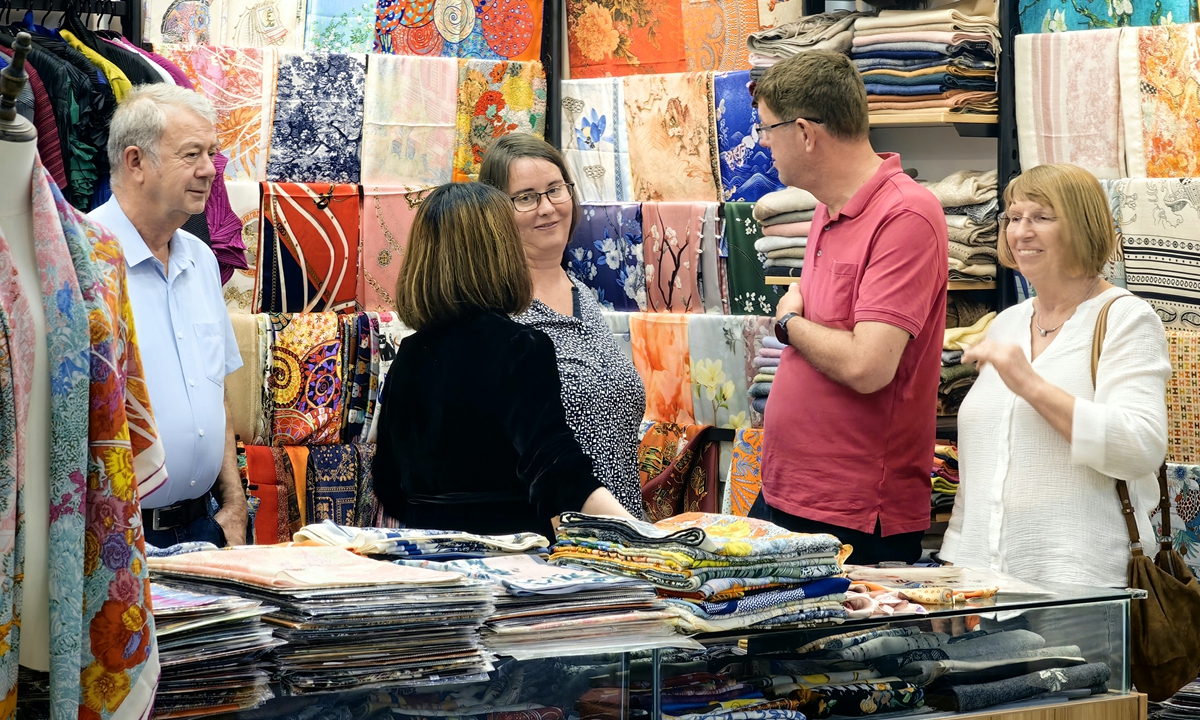 For many overseas travelers arriving in Shanghai, the Bund and the Oriental Pearl Tower are no longer the first stops on their itineraries. Instead, they head straight to the South Bund Soft Spinning Material Market, where custom-tailored outfits have become a signature experience driving "Chinamaxxing," a viral lifestyle trend popular among global travelers. The market buzzed with energy, with conversations in various foreign languages echoing across storefronts, when a Global Times reporter visited it on a work day. Tourists from different countries take body measurements, browse design references, and discuss tailoring preferences with local shopkeepers. Evolving from the time-honored Dongjiadu cloth market, the area now hosts more than 280 fabric vendors and tailor studios, forming a complete industrial ecosystem for custom apparel. Inside one local shop, two foreign tourists excitedly tried on a series of Tang-style garments, taking photos of their favorite looks before professional tailors record precise measurements for their custom-fit clothing. Gabbo, an Italian traveler, told the Global Times that he first discovered the market through TikTok and Instagram. As silk markets in Shanghai have grown popular among Italian tourists, he and his travel companion Nicco came specifically to shop for authentic traditional Chinese garments and premium silk pieces. "I picked out a brown Tang-style jacket and a white shirt, while Nicole got matching white shorts. We wanted to try something new and plan to wear our custom outfits out tonight because the styles are very fashionable," Gabbo said. "The bespoke measuring service is professional and thoughtful, and the whole shopping experience has been wonderful." Intl tourists emerge as a major force Benefiting from China's visa-free policy covering Italy, the pair only needed to submit standard tourist documents for entry. They plan to stay in China for roughly two weeks to explore local culture and lifestyles. Local tailor shop owners have witnessed a striking surge in overseas customer demand. Driven by expanded visa-free policies and viral social media exposure, growing numbers of foreign tourists come to the market for original Chinese-style custom clothing. According to shop owner Li, international visitors now account for 30 to 40 percent of her clientele, a dramatic reversal from previous years when domestic customers dominated orders. "We source fabrics directly from suppliers and hire in-house tailors to eliminate middleman markups. Our bespoke pieces cost only one-third of similar custom outfits in Western countries," Li explained. The shop also offers expedited services tailored for short-stay travelers, allowing visitors to pick up finished garments within days. All garments feature original in-house designs that retain classic Tang-style outlines with soft, wearable color tones suitable for daily wear. Many foreign customers style the traditional jackets with casual trousers and sneakers, creating unique, modern outfits that blend Eastern aesthetics and Western casual fashion, Li said. Qian, another tailor with 20 years of industry experience, has also seen robust growth in overseas orders, with her annual order volume rising 20 percent year-on-year. Most foreign visitors come for custom-tailored suits and enjoy the full immersive bespoke production process. Her workshop divides labor for suits, shirts and dresses to boost efficiency, once completing a full set of custom clothes and delivering them to a tourist's hotel by 10 p.m. on the very day of ordering. The studio also accepts personalized design drafts brought by international visitors. Backed by the mature textile supply chain of the Yangtze River Delta, hand-tailored suits at the market cost merely one-quarter of equivalent bespoke outfits in Europe, with 24-hour rush order services available. This year, market foot traffic has increased roughly 30 percent year-on-year, with foreign shoppers making up 60 percent of all customers, the Global Times learned from the market. Behind the change are China's visa-free policies. China's 240-hour visa-free transit policy covering 55 countries has greatly facilitated cross-border travel. Official data shows China received 22.91 million inbound foreign visits in the first half of 2026, a year-on-year increase of 20.4 percent, China Media Group reported. From short-term visits to lasting influence Boosted by China's visa-free policies, the social media trend "Chinamaxxing" has gone viral worldwide. Easier cross-border travel has allowed young foreigners to immerse themselves deeply in authentic Chinese lifestyles, including traditional fitness practices, Chinese dramas and local food culture. Beyond garment customization, Shanghai's inbound tourism experience sector continues to expand. Spring Travel recently launched hands-on traditional snack workshops for foreign visitors, focusing on wonton and spring roll making. Tourists can cook, taste homemade snacks and learn the cultural stories behind local cuisine. The workshops have received visitor groups from the US, Brazil and Australia and earned wide praise, the Global Times learned from Spring Travel. Sugiurat Akuto, one foreign participant, said that making Shanghai snacks left him with precious travel memories. Before leaving China, he asked chefs for original recipes, hoping to recreate authentic Chinese delicacies at home and share his unique Shanghai travel experience with family and friends. Unlike disposable souvenir purchases during routine sightseeing, custom-tailored clothes and learnable cultural skills turn short travel experiences into enduring cross-cultural connections. "These custom outfits will remain precious memories for decades. Even 20 years later, we will still remember custom-tailoring clothes in China. Every time I see these garments in my wardrobe, I will recall this special trip," Gabbo said, adding that distinctive local custom pieces are far more valuable than ordinary travel souvenirs. Industry analysts note that the Chinamaxxing phenomenon marks a structural upgrade in China's inbound tourism consumption. Driven by optimized visa policies, foreign travelers are shifting from superficial landmark sightseeing to high-value, personalized immersive experiences. Longer stays and upgraded consumption drive coordinated growth of modern service industries and inject new vitality into China's service economy. Research by the Shanghai Municipal Commission of Commerce shows that inbound tourists who opt for customized consumption stay an average of six to seven days in Shanghai, more than double the city's average 3.21-day stay for general foreign visitors. Current cultural tourism experiential products represent only the initial stage of this emerging industry. China's rich cultural resources can be continuously developed into high-quality, replicable tourism offerings for global audiences, Zhang Yi, CEO of iiMedia Research, told the Global Times on Tuesday. Most importantly, the Chinamaxxing trend boosts people‑to‑people exchanges. One‑off on‑site travel purchases translate into steady overseas demand and repeat orders, helping international audiences gain deeper insight into China's charm, Zhang noted. 。 优化职责衔接机制。建立工作会商、信息推送、联络对接、业务协同、人员管理等六项制度;厘清职责边界,明确审批部门对审批结果负责,监管部门提供业务支持;统一规范现场核查由审批部门组织、监管部门派观察员参与,改变了以往现场核查不规范的状况。 强化许可协同管理。聚焦许可延续、退出程序、审查方案三大环节强化协同,确定信息推送时限和内容,建立联席会议和专项会商制度,对无审查细则品种,由两部门联合制定方案。 加强人员分类管理。将许可人员分为许可工作人员、现场核查人员、观察员、专业技术人员四类,要求每年至少开展1次业务培训,并将审管工作纳入食品安全评议考核。该机制填补了全省审管分离衔接制度体系的空白,推动了事前审批和事中事后监管一体贯通。 案例二:重庆市构建餐厨废油全链条数字化智能监管模式 针对“老油”回流餐桌、餐厨废弃物污染环境等问题,重庆市市场监管局依托“餐饮安全在线”应用,开发废油“产—运—处—销”全链条数字化功能。
C | 餐厨废油处置全环节监测。建立覆盖24万家餐饮单位的主体数据库,99%以上合法收运处置单位已入驻,实现餐饮单位在线呼叫、收运单位智能接单;安装智能油水分离器、物联油桶等设备,实时监测收运车辆,每日优化收运线路1300余条,打通处置单位地磅数据,实现多维度校核,联动销售数据验证,有效避免废油重回餐桌。 构建异常监测模型。
D | 对油量异常、超时超范围收运等实施预警,准确率达92.3%,高风险事件24小时处置率达100%;建立反餐饮浪费算法,日均餐厨垃圾产量同比下降18%,废油资源化利用率从86%提升至95%。
E | 跨部门协同治理。联合税务、城管部门推行“数字管理—数智支付”模式,打通业务、劳务、资金流,开具全国首张餐厨废油发票;联合城管、公安等部门推行数字化管理,收运响应时间从平均48小时缩短至4小时,电子收运联单使用率达100%,替代纸质单据68万份/年。
F | 案例三:江西省鹰潭市创新农批市场联动监管机制,推动食用农产品“全链条、多维度”共治 针对食用农产品批发市场问题发现效率低、处置偏弱、主体责任落实难等问题,鹰潭市市场监管局立足全市唯一的农批市场,自2025年2月起在全省率先开展监管联动试点。 实施夜间精准监管。根据市场凌晨交易活跃的特点,每周至少3次从当晚11时至次日凌晨3时开展快速检测、监督抽样、溯源查流向等工作,截至2026年6月,已开展夜间联动监管136次。 创新“211”快速检测工作法。
G | 根据市场监管总局“7条鱼”“2棵菜”要求和江西省抽检数据确定14个重点品种,实现“2小时完成快速检测、1小时完成快检复测和监督抽样、1个工作日出具监督抽检结果”,抽检由法定20个工作日缩短为1个工作日,共开展快速检测1615批次,问题发现率达6.63%。 实施问题前处置模式。对快检阳性且超过限值的立即暂停销售,已暂停销售问题产品10余批次、1000余公斤,查扣不合格产品1583.5公斤,确保问题产品不流出市场;构建跨部门跨区域协同网络,与农业农村部门信息互通、联合执法,向上下游发送协查函10份。 严格市场准入。全面贯彻市场监管总局令第81号,入场经营户统一实行“四亮”,市场开办方24小时入市查验,做到“三个不得”;引入“信用+数智”技术,建立分级数据库,开展星级诚信经营户评选。 案例四:安徽省马鞍山市打造“码上共治”校园餐饮服务意见受理处置新模式 针对校园食品安全负面舆情易发多发问题,马鞍山市市场监管局建立“有意见‘码’上提”平台,将问题解决在一线,切断舆情演变路径。 构建三级联动体系。联动监管部门、学校、食堂,打造“扫码投诉—智能分派—快速处置—整改反馈—满意度评价”闭环,要求24小时内办结,超时自动升级督办。 搭建预警模型。将DeepSeek等大模型接入平台,设计6个一级和24个二级分类标签体系,智能归类准确率达97%,对可能引发舆情的投诉10分钟内自动预警推送;构建“时效—质量—满意度”三维评价体系,每月自动生成排名并通报教育部门,形成“通报—整改—复核”监督闭环。 完善制度机制。建立培训考核制度和知识库系统,制定应急处理预案并定期演练。
H | 平台已覆盖48个食堂,服务8.15万人,受理有效投诉3908件,平均处理时间0.5个工作日,处置完成率100%,运行至今未发生舆情外溢。
I | 案例五:长三角地区协同落实食品安全从业禁止规定 针对违法主体跨区域“换马甲”经营、禁业人员隐蔽从业等问题,沪苏浙皖三省一市市场监管部门联合印发《关于落实食品行业从业禁止规定的通知》,建立跨区域协同机制。
J | 制度共建。
K | 要求严格执行《中华人民共和国食品安全法》第一百三十五条,建立从业禁止人员名单库和市场准入拦截机制;数据互联,将行政处罚和司法判决信息归集入库,搭建从业禁止数据交互平台,统一数据归集范围、字段和接口规范,实现名单库实时共享互认。 禁业联防。将数据嵌入许可备案系统,自动触发从业资格校验,在许可申请、延续变更环节实施“关口前查”,对小微主体开展“触发式核验”,通过自动预警、人工复核、行政指导多措并举。 违法同处。
L | 建立存量问题分类处置机制,对非主观故意聘用禁业人员的主体实行“告知—整改—复查”闭环管理,对小微主体实行柔性监管。名单库已归集终身禁业13746人、五年禁业258人,累计校验309.8万次,精准拦截违规操作15809次。 Current article:http://ce7r.guizhuanguchuanluanzhoudi.shop/juch4/20260826/4346.html Published on:01:37:53 |


