
天地争霸美猴王
"China Cool" appeals to international tourists in more ways than one_我的网站

一 |
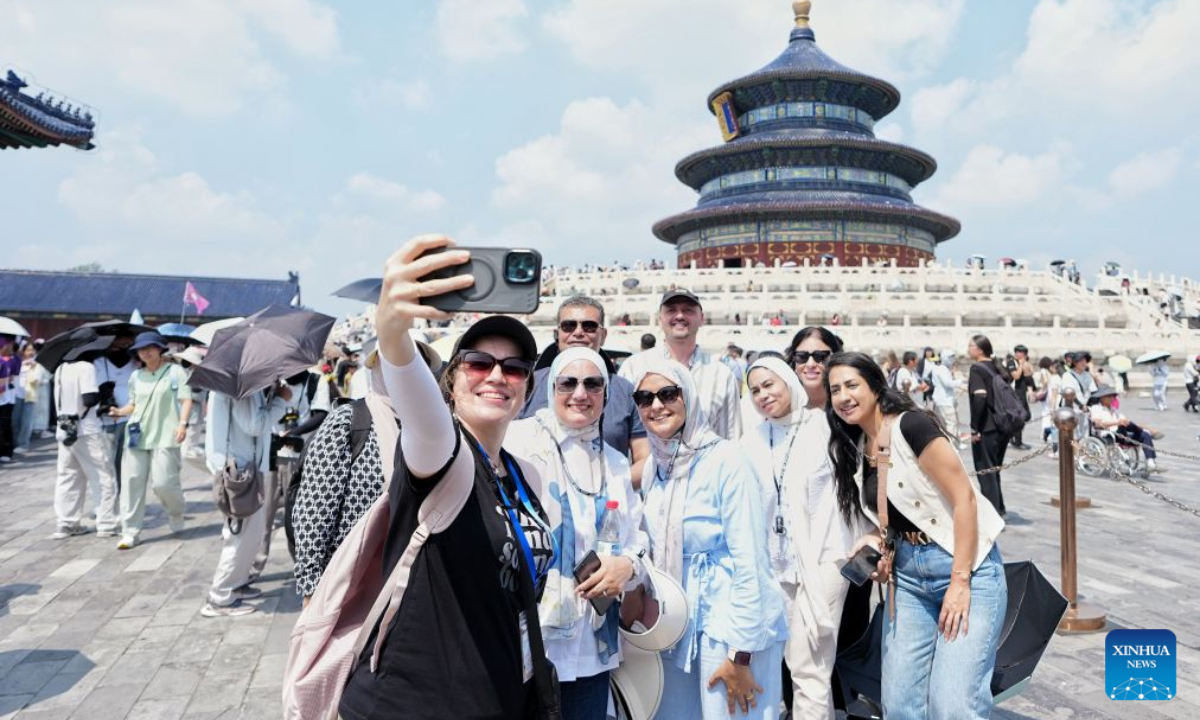
"I've come to nature's air conditioner."
That was the reaction of a Spanish tourist visiting southwest China's Yunnan Province this summer. Before arriving, he had been enduring temperatures of around 40 degrees Celsius. But when his flight landed in Kunming and he stepped out into the breeze, the relief was immediate. His trip in search of cooler weather had proved well worth it.
This summer, as heat waves swept across many parts of the world, an increasing number of foreign tourists are heading to China to escape the heat.
In places such as Zhangjiajie in central China's Hunan Province, where mountain scenery creates a natural cooling effect, and the water town in "Jiangnan," the scenic region south of the Yangtze River, where visitors can enjoy the slower pace of life by the canals, cool weather has become part of the travel experience itself. Local specialties and products that help people beat the heat add to the appeal.
But the "cool" in "China Cool" goes beyond the weather. It also comes from the variety of experiences available to visitors. They can listen to the bells of an ancient temple at dawn, learn traditional crafts from artisans, take a high-speed train to another city, or simply order a late-night meal with a few taps on a smartphone. Such everyday experiences showcase China where tradition, convenience and modern life coexist.
That sense of "cool" is even more striking when it comes to technology. Visitors can explore smart factories, try AI glasses with real-time translation, interact with robots, and take autonomous vehicles. For many foreign visitors, these experiences offer a glimpse of China's high-tech future and add a new dimension to the country's image beyond its traditional landmarks.
The growing number of international visitors has also been facilitated by China's efforts to make travel more convenient. According to the National Immigration Administration, China received 22.91 million inbound foreign visitors in the first half of 2026, up 20.4 percent year on year. Visa-free entries accounted for 77.7 percent of this total.
As more visitors arrive and experience the country firsthand, the way China is talked about overseas is also evolving. Phrases such as "China Travel," "Becoming Chinese" and "Chinamaxxing" have gained attention on overseas social media, while "China Cool" offers a new way to capture the broader appeal of these experiences, reflecting interest in China that is no longer experienced only through its famous landmarks, but also through its culture, technology, services and everyday life.
For international visitors, China is proving to be cool in more ways than one.



。
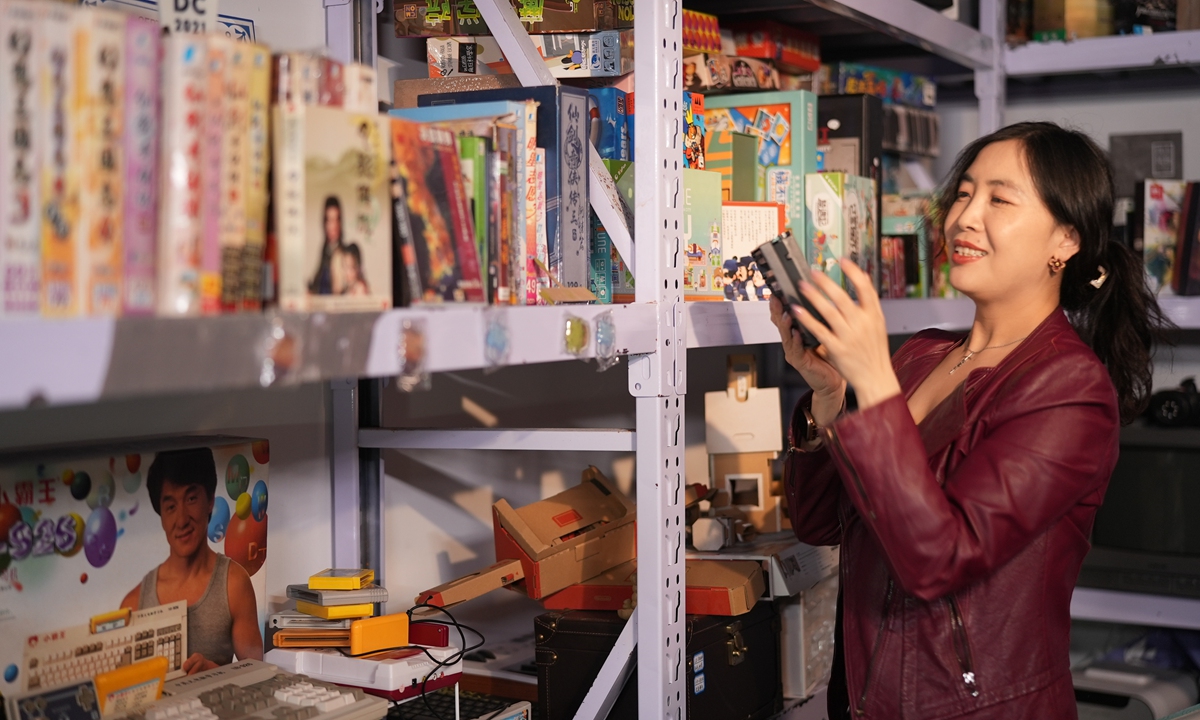
Inside Beijing's Homoludens Archive, shelves are filled with books, game consoles, game cartridges and other materials tracing the history of video games. For Liu Mengfei, the archive's director and chair of the academic committee of the Gamification Professional Committee, these collections preserve more than the evolution of games, they also capture the cultural memories of a generation.
A PhD in history from Tsinghua University, Liu has spent more than a decade studying the social impact of games, the role of games in history and digital humanities. Throughout her career, she has continued to explore the relationship between games and people: Why do humans create games? And how do games shape culture and society?
Books, meanwhile, have been an important gateway through which Liu has come to understand the world of games.
"The real value of a book lies not simply in what it tells you, but in whether it can change the way you understand the world and people," Liu told the Global Times.
Books meet games
In 2007, being an undergraduate history student, Liu wrote her thesis on the links between ancient Celtic religion and modern digital games.
To study original sources such as The Gallic War by Roman author Julius Caesar, she taught herself Latin. As her research extended into modern games, she also began reading the rulebooks of Dungeons & Dragons, a tabletop role-playing game.
"From historical texts to game rulebooks, these reading experiences seemed to belong to completely different worlds, but they gradually led me to realize that games are not simply entertainment products. They also contain history, culture and the relationships between people and society," she said.
Later, Homo Ludens, by Dutch historian Johan Huizinga, further transformed the way she understood games. The book gives a theory that humans are not only Homo sapiens, or "rational beings," but also Homo ludens, or "playing beings," and that games are deeply intertwined with human culture, from language and art to religious rituals and sports.
The book had a profound influence on her. It points out that the foundations of human society — language, civilization, religious rituals, sports and art, are all connected to play and games, because we are Homo ludens, "the playing human."
"The idea prompted me to view games from a broader perspective," Liu said. "Games are not an appendage outside human civilization, but are deeply connected to cultural creation and social life."
"It also showed me that games and game-based thinking could extend into broader fields, including education and technology," she added.
She later read other works on game studies, including Play Between Worlds: Exploring Online Game Culture, Half-Real and Rules of Play Game Design Fundamentals. Play Between Worlds, in particular, opened up another possibility for game studies at a time when discussions about "internet addiction" were prevalent in China.
"Games are not simply a form of entertainment that needs to be restricted or criticize;. they can also serve as important media for storytelling, cultural expression and exploring relationships," she said.
These reading experiences gradually shifted Liu's focus from simply asking "What are games?" to a deeper question: What can games bring to people?
Beyond time and technology
Periodically, Liu still returns to Homo Ludens in her free time, finding new insights from the book as society changes. In the age of artificial intelligence, she has revisited one of its fundamental questions: As AI becomes increasingly capable of handling repetitive tasks and surpasses humans in efficiency, what does it mean to be human?
"As AI takes over more monotonous and repetitive work, the time freed up should be devoted to creativity, experience and human relationships," she said. "The time we gain should actually be used to become better at 'playing humans.'"
For Liu, this also requires people to maintain their ability to think, imagine and reflect -- abilities that cannot be gained through simply receiving information. This has also prompted her to reconsider the meaning of reading.
In an era when AI can quickly summarize an entire book, Liu believes people still need to read the original works in full, because the value of reading lies in more than simply acquiring knowledge and conclusions.
"Reading a book is like a form of cultivation. You have to immerse yourself in it, patiently allow the author to take you on a journey, and find your own island along the way," she said.
For Liu, the value of reading is not limited to books on paper. As media evolve, so do the ways people encounter stories and understand culture. Some digital works are now becoming new vehicles for reading.
Chinese-developed games such as Genshin Impact contain hundreds of thousands, and even more than a million Chinese characters of text, while Black Myth: Wukong uses its "Journal" system to tell the stories of individual monsters through written entries.
"Digital games are carrying forward traditions inherited from literature and film, becoming new gateways, through which young people can enter the worlds of literature, history and traditional culture," she said.
"An important reason why Black Myth: Wukong has succeeded in communicating Chinese culture is that it does not simply insert traditional cultural symbols into a game. Instead, it draws on the original Journey to the West, contemporary works inspired by the classic, as well as the game's own rules and interactions, allowing players to develop a new understanding of traditional culture through their actions," she noted.
For Liu, the forms of reading may change, but the desire to understand the world and discover oneself will not. From books to digital worlds, what matters is not only what people read or play, but how they think, create and find meaning through these experiences.
。

二 |
Current article:http://ce7r.guizhuanguchuanluanzhoudi.shop/news/20260826_568739.html
Published on:09:36:41
[责任编辑: 马徒顺华]
评论
-
关于我们 | 我的网站 版权所有
Copyright ? 2019 我的网站 All Rights Reserved